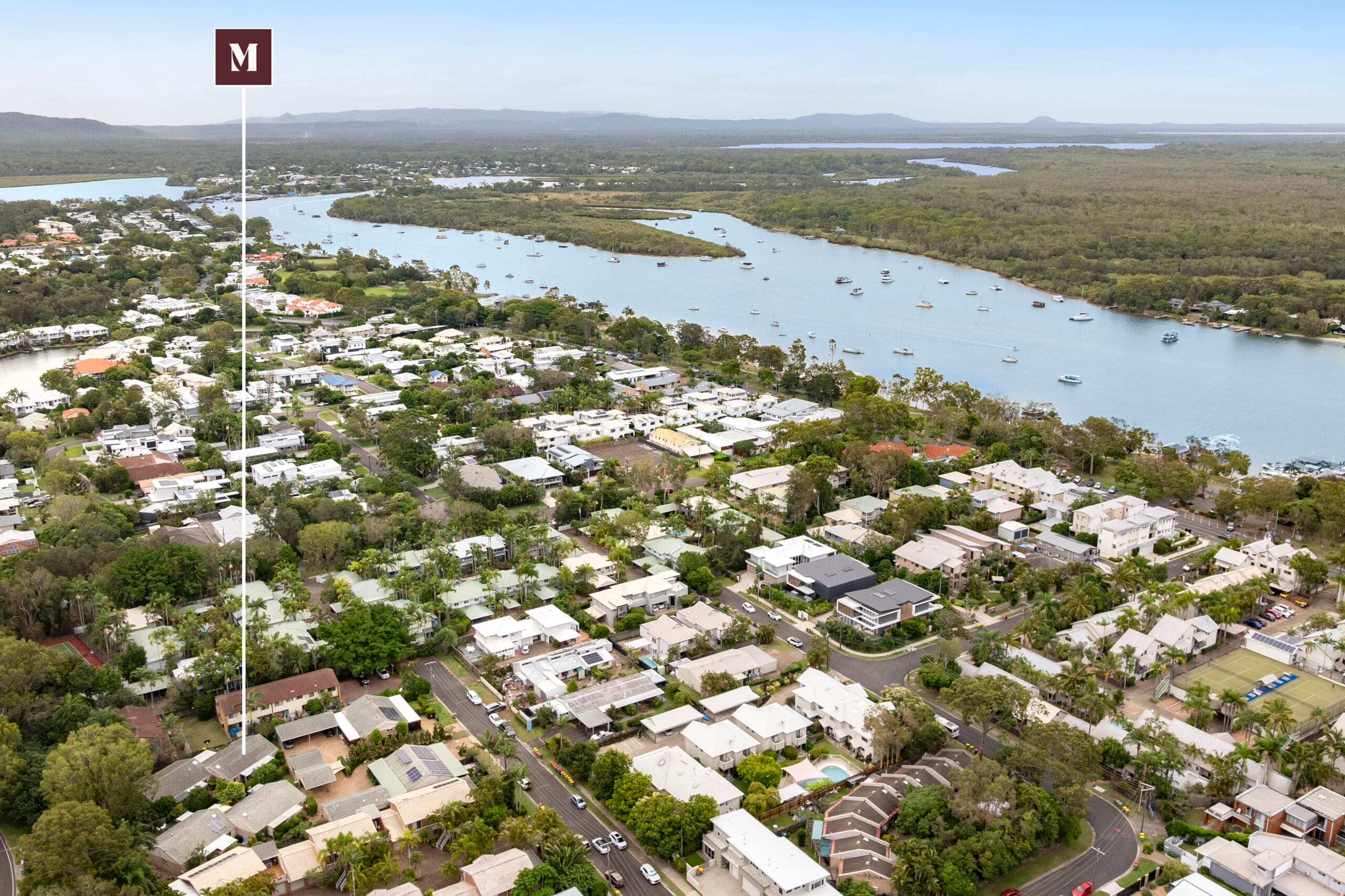
It's one of the first questions buyers ask me about Noosaville, and the honest answer is: it depends on what you're trying to achieve.
A house isn't automatically the better buy here. Neither is a townhouse the obvious "entry-level" compromise. In a market this tightly held, the stronger asset is simply the one that meets consistent demand — and both types can do that, for different buyers.
What you're really buying with a house
A detached house gives you land, and land is what underpins long-term capital growth. In Noosaville that matters, because supply is limited and well-located blocks rarely come back to market often.
Houses tend to suit buyers who want a larger land component and long-term growth profile, room to extend, renovate or reconfigure over time, privacy and a freestanding footprint, and no body corporate to answer to.
The trade-off is a higher entry price and more maintenance. You own the roof, the garden and everything that goes wrong with both.
What you're really buying with a unit or townhouse
Townhouses and units in Noosaville aren't a second-rate option. For a large share of the market, they're the deliberate choice — and they're often tightly held for good reason.
They tend to suit buyers who want a lower entry point into a premium suburb, lock-and-leave convenience (especially relevant for downsizers and part-time residents), less maintenance and a smaller footprint, and proximity to the river without a freestanding price tag.
The trade-off is body corporate. That's not a negative in itself — a well-run scheme protects your asset — but the financial health of the body corporate becomes part of your due diligence. Always ask for the statements before you fall in love with the floor plan.
Why the comparison is different in Noosaville
A well-positioned townhouse meeting clear demand can be a more efficient use of capital than a compromised house in a weaker pocket.
In many suburbs, houses outperform units comfortably over time. Noosaville is more nuanced, for one reason: demographics. A significant portion of buyers here are downsizers and retirees relocating within the region. They actively want quality, low-maintenance, well-positioned townhouses — and there aren't many of them. That scarcity supports strong performance for the right unit stock in a way you don't always see elsewhere.
The factors that actually move the decision
Whichever type you lean towards, the same handful of things drive value: proximity to the river and Gympie Terrace (the single biggest lever), renovation quality and presentation, flood and planning overlays (check these early, for both types), privacy, orientation and outlook, and — for units — body corporate health, garaging and storage.
Two properties a few streets apart can perform very differently. The house-versus-unit question is real, but micro-location often matters more than the dwelling type. We unpack the cost side of either decision in The real cost to buy in Noosaville (2026).
So which is right for you?
Ask yourself what the next ten years look like, not the next twelve months.
If you want to grow a family, hold land and ride long-term growth, a house usually makes sense. If you want to simplify, stay mobile, or step into the suburb at a more accessible price without sacrificing position, a quality townhouse can be the smarter buy — and in Noosaville, occasionally the better-performing one. For the discipline that protects either choice, see How to buy smart in a competitive Noosaville market. Thinking of selling first to fund the move? Start with the Selling in Noosaville guide.